
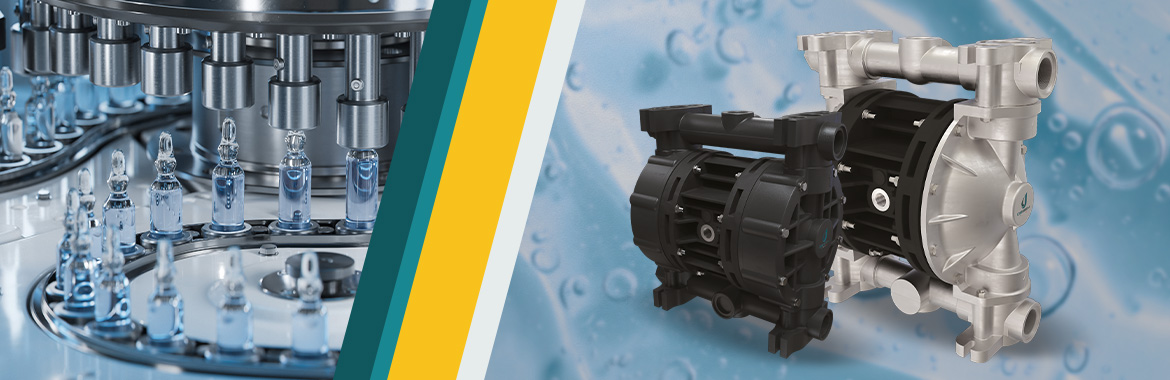
The chemical sector is one of the most important industrial sectors in terms of economic impact and its role as an “enabler” for many other sectors such as energy, manufacturing, pharmaceuticals and water treatment. For this reason, in fluid transfer activities, the choice of suitable chemical pumps affects production continuity and compliance with key safety, environmental and health standards. In this guide, we simply want to define the minimum requirements that a pump must meet to be truly suitable for the chemical context, before even comparing models and sizes.
What is a chemical pump?
A chemical pump is a pump selected and configured on the basis of three essential variables:
- the chemistry of the fluid: which may be corrosive, solvent or abrasive.
- the operating conditions expressed in terms of flow rate, back pressure and transients.
- safety requirements: leak containment, material compatibility, classified area if applicable.
In the chemical industry, “transferring” means moving a liquid without degrading components, without process instability and without introducing risks to people and equipment. This gives rise to the need to establish minimum verifiable criteria.
What are the minimum requirements for a chemical pump?
Before comparing solutions, it is worth defining the “non-negotiable” requirements that determine reliability and safety. If even one of these points is overlooked, the likelihood of downtime, leakage or premature failure increases.
- Safety and containment: the configuration must reduce the risk of leaks and allow for safe operation and maintenance.
- Chemical compatibility: body materials, diaphragms and seals must be resistant to the fluid and detergents, avoiding swelling, chemical attack or degradation.
- Reliability under variable conditions: the pump must maintain stable performance even with variable viscosity, the presence of solids or process transients.
In summary, the correct selection is not only about performance, but also about the predictability of behaviour over time.
What characteristics distinguish chemical industry pumps in a plant?
In a chemical plant, the difference between a “suitable” solution and a “robust” solution can be seen in three areas: safety, materials and integration. In terms of safety, design choices that reduce the likelihood of leakage and facilitate operational management are important. In terms of materials, the availability of dedicated configurations allows adaptation to aggressive fluids and detergents. In terms of plant engineering, choices are needed that stabilise the process and make performance repeatable. To make these criteria immediately applicable, a summary table helps to translate the requirement into control.
| System requirement | What to check | Why it matters |
| Safety/HSE | Containment and leak management | Reduces operational and environmental risk |
| Aggressive fluid | Consistent contact materials | Prevents degradation and premature failure |
| Variable process | Stability in transients and solids | Reduces downtime and line instability |
How to quickly verify requirements before ordering?
To prepare an effective request for quotation, only a few carefully selected pieces of information are needed. The goal is to avoid lengthy specifications and focus instead on concise, verifiable documentation.
- Define the fluid: chemical nature, abrasiveness, presence of solids, viscosity and its variations.
- Indicate the operating conditions: target flow rate and expected back pressure, also as a range.
- Request material compatibility: body and components in contact must be compatible with the fluid and detergents.
- Clarify safety constraints: presence of classified areas and internal regulatory requirements (procedural or plant-related).
- Confirm available services: in particular, the quality of compressed air when required by the technology (filtration/regulation).
With these points clear, the selection becomes traceable and start-up tends to be more straightforward.
Application example: what changes when the fluid is “not just liquid”
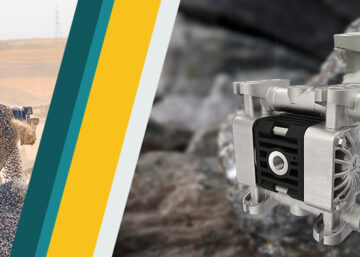
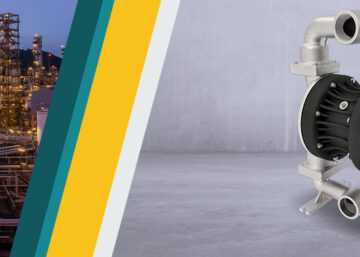
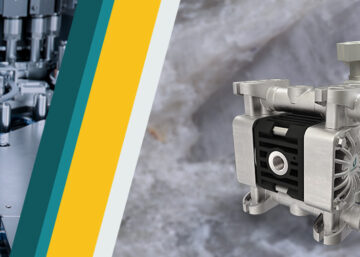
A recent Debem application case clearly illustrates why minimum requirements are not just theory. When using the BOXER 522 to transfer chemical products, the customer had to move highly corrosive and abrasive fluids from collection systems to the next stages of processing, in conditions where “variability” depends not only on chemical composition but also on sediments and particulates. In this scenario, the choice of pump is based on three pillars: containment (reducing the risk of leaks), compatibility (materials and seals consistent with the fluid) and reliability even under operating conditions that are not perfectly constant. When these elements are centred, downtime and risks are reduced and a more stable operating capacity is consolidated.
Discover the DEBEM range of chemical pumps
To transform these criteria into a concrete choice, it is useful to start with the minimum data (fluid, operating range, HSE constraints) and compare them with the solutions available for the chemical sector. The Debem team supports the selection of the most suitable configuration, aligning materials, safety requirements and actual plant conditions, with the aim of reducing risks, downtime and operating costs.

Questions and answers about chemical pumps
Are chemical pumps only used for acids and solvents?
No. In industry, they also include resins, suspensions with solids and abrasive or variable viscosity fluids. The choice depends on the chemistry, solids and operating conditions.
What makes a pump “suitable” for chemicals?
Three minimum requirements: safe containment and management of leaks, chemical compatibility of materials in contact, stable behaviour even with transients and fluid variability.
What minimum information is needed to request a correct quote?
Nature of the fluid (chemistry/abrasiveness/solids), flow rate and back pressure range, safety constraints (classified area, if any) and services available in the plant.
When does safety become the dominant criterion in the choice?
When the fluid is aggressive or hazardous, when the plant operates in areas with stringent HSE constraints or when the consequences of a spill are high. In these cases, the selection must prioritise containment and compatibility over performance.