
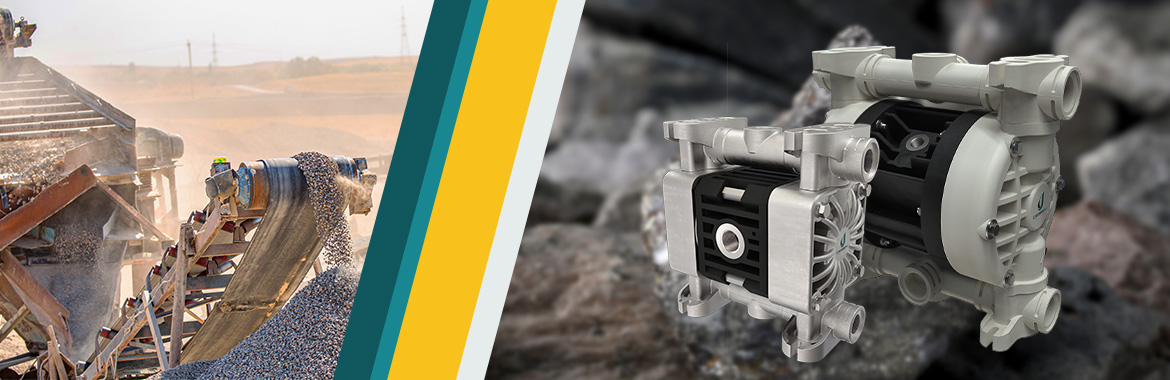
Pumps for the mining sector are characterised by particularly stringent operational requirements, where abrasion, suspended solids, operational continuity and plant safety directly affect process reliability. In mines, quarries and associated plants, the choice of pump depends above all on its ability to maintain stable performance in the presence of aggressive fluids, slurries and intensive duty cycles. For this reason, before comparing models and technologies, it is advisable to define the minimum operational requirements in order to reduce the risk of downtime, premature failures and inefficient fluid management along the line.
What are the minimum requirements for pumps used in mines and quarries?
When selecting a pump for mines and quarries, it is useful to consider at least four fundamental requirements.
- Abrasion resistance: many mining fluids contain solid particles that accelerate component wear.
- Operational stability: the pump must maintain predictable performance even with variations in viscosity, density or solids concentration.
- Safety and containment: leaks, spills or breakdowns in the production area can have significant environmental and operational consequences.
- Maintainability: in demanding environments, ease of inspection and maintenance has a direct impact on downtime.
In summary, it is not enough for a pump simply to ‘work’: it must do so in a repeatable and sustainable manner over time. This is the real distinction between a solution that is merely compatible and one that is truly suited to the mining context.
What characteristics truly set mining pumps apart?
When it comes to mining pumps, sizing the solution based solely on the nominal flow rate is often a mistake. In the presence of slurries, abrasive suspensions or fluids containing solids, factors such as particle size, viscosity, back pressure, suction head and actual line conditions also come into play. This means that two applications with the same flow rate may require very different pumps. It is one thing to transfer process water; it is quite another to handle abrasive slurries or mixtures containing sand, residues and additives, where the robustness of the design takes precedence over theoretical performance figures alone.
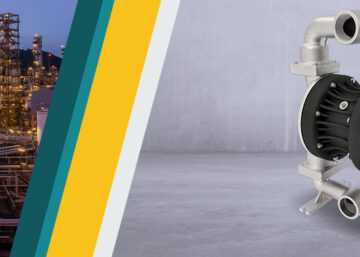
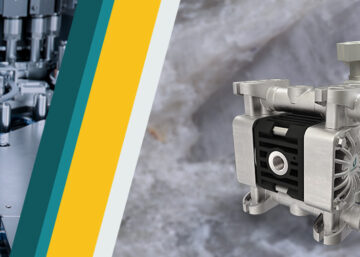
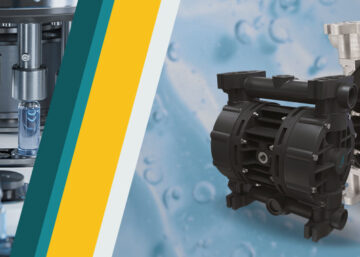
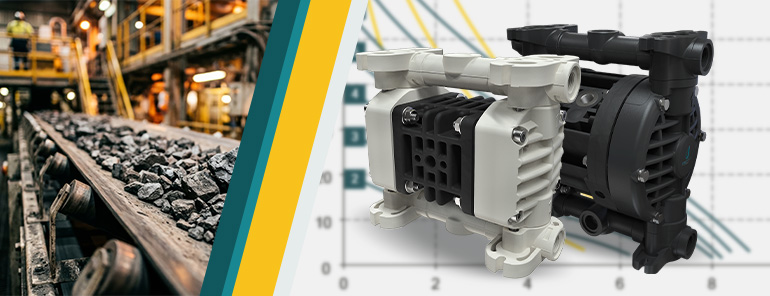
Pumps for the mining sector are distinguished above all by their ability to handle harsh environments and problematic fluids without compromising reliability. In the case of Debem’s pneumatic double-diaphragm pumps, the mining sector is among the recommended areas of application for tasks such as handling process fluids and operating in demanding industrial environments.
In practical terms, the characteristics to be assessed are:
| Requirement | What to check | Why it matters |
| Abrasive fluid | Resistance of wet materials and tolerance to solids | Reduces wear and premature failure |
| Variable process | Stability with variable density and viscosity | Reduces instability and downtime |
| Operational safety | Leakage control and compatibility with the working environment | Minimises environmental and operational risks |
| Service continuity | Ease of maintenance and long-term reliability | Improves plant availability |
How can you quickly assess the requirements for a pump in the mining sector?
To draw up a suitable request for quotation for an AODD pump for the mining sector, there is no need to produce endless documentation. It is more useful to gather a few essential but verifiable pieces of information, so as to link the fluid’s behaviour to the actual process constraints.
The minimum information to be gathered is:
- Type of fluid: process water, slurry, abrasive mixture, additive or suspension containing solids.
- Presence and nature of solids: concentration, size and abrasive behaviour.
- Operating conditions: flow rate, back pressure, head and service continuity.
- Safety requirements: installation area, risk of leaks, any ATEX or IECEx requirements.
- Maintenance constraints: accessibility, frequency of servicing and maximum acceptable downtime.
With this data, the selection process becomes more traceable and the risk of comparing solutions solely on paper – without taking into account actual behaviour within the plant – is reduced. In mining and related applications, abrasive conditions are often the factor that truly determines the choice of pump. A configuration suitable for a relatively clean fluid may not be sufficient when solids, viscosity or flow irregularities increase, as is the case with various pumps for mining applications. For this reason, the correct selection rests on three pillars: materials compatible with the fluid, the ability to handle abrasive suspensions, and stable performance even in the presence of transients or operational variations. When these elements are properly addressed, downtime, unscheduled maintenance and the risk of efficiency losses along the line are reduced

FAQs on pumps for the mining sector
Are pumps for the mining sector only used for sludge and slurry?
No. They can also be used for process water, additives, technical mixtures and other fluids associated with mining operations and support facilities.
What makes pumps suitable for mines and quarries?
The combination of abrasion resistance, stability with varying fluids, leak-proof design and ease of maintenance.
What minimum information is required to request an accurate quotation?
Type of fluid, presence of solids, operating conditions, safety requirements and maintenance constraints of the plant.
When does safety become the overriding criterion?
When the fluid is corrosive, when the risk of leakage is high, or when the system operates in areas with strict constraints, including applications with potential ATEX or IECEx requirements.